A list of the biggest advances in lab robotics needs more than product names and polished demos. Without dated results, prices, task limits, and named sources, no fair ranking can tell you which systems matter to your lab.
- A demo is evidence only when the task, timing, and failure rate are clear.
- Throughput means how much work a system completes in a set time.
- The useful question is whether the robot improves repeatability, cost, or access to lab work.
Start with the task
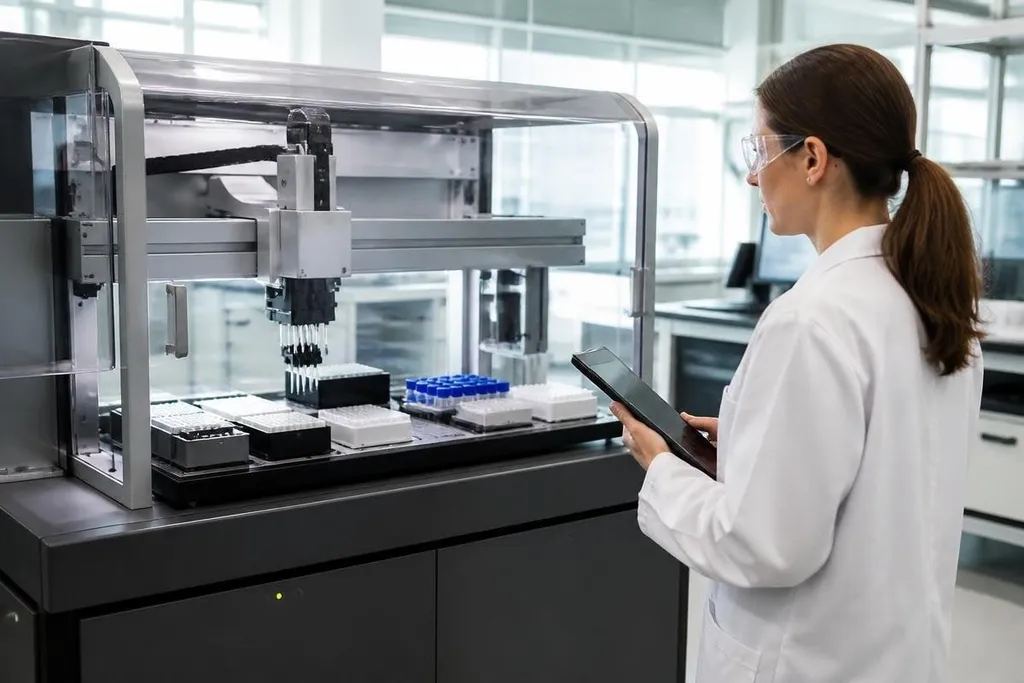
Lab robotics covers many jobs. A system may move sample plates, pipette liquids, sort items, inspect images, or run tests without a person at each step. Those jobs need different measures, so one general score would hide the details that affect a purchase.
For liquid handling, check the allowed volume range, error rate, and the types of containers the system supports. For inspection, check image quality, lighting conditions, and how the system handles samples that do not match the training set.
The setting matters too. A robot that repeats one fixed motion may work well in a controlled lab. That result says less about a lab where people change tools, containers, or test steps during the day.
Separate a demo from a result
A video can show that a robot completed one task. It cannot, by itself, show how often the task failed, how much setup it needed, or what happened after repeated use. Those details decide whether an advance works outside a demo room.
A useful report should state the number of runs, the task conditions, and the failure cases. It should also say who ran the test and when.
A paper from a university lab, a customer report, and a maker’s own video carry different limits, so the source belongs beside the claim.
For lab robots, a useful report names the task, test, and person who stepped in when the system failed. Robotics reporting on lab machines can keep those details beside claims about new software, so you can check what the system chose and when a person took control.
The same rule applies to claims about artificial intelligence. If software chooses the next lab step, the report should show the data it used, the checks that stopped unsafe actions, and the cases where a person had to take control.
Measure the gain in lab terms
A new system earns attention when it changes work that a lab already needs to do. That change may mean fewer manual transfers, more consistent timing, or access to tests that need long runs. The claim still needs a comparison with the old method.
For example, a report might compare the time needed for a person and a robot to prepare the same batch. It might compare the number of handling errors, the cost of staff time, or the number of samples completed before maintenance. Without that reference, “faster” has no useful meaning.
Cost also reaches beyond the purchase price. A lab may need new benches, safety equipment, software support, training, or a technician who can fix faults. A lower price can lose its value if the system stops often or needs a specialist for routine changes.
I’d reject any ranking that treats a polished demo as proof of lab value.
A practical check before you rank a system
Use these questions when a paper, launch, or video claims a major advance:
- Task: What exact lab job did the robot complete?
- Proof: How many runs are reported, and who collected the results?
- Limits: Which samples, tools, or conditions caused failure?
- Human work: What setup, supervision, and fault recovery does the system need?
- Cost: What must the lab buy, change, and staff beyond the robot?
- Next test: What result would show that the system works in your own lab?
This check also helps with older systems. A machine does not become less useful because its launch received less attention. If it cuts handling errors in a task your team repeats each day, its value may be easier to prove than a newer system with thin test data.
A sound list of lab robotics advances should therefore rank verified changes in lab work, not the volume of an announcement. The next system worth your time is the one with a clear task, repeatable results, known limits, and a cost your lab can measure.